In October 1943 the London County Council decided to buy the Oxhey Place estate compulsorily, and it made the order on 21 December 1943.96,97 In September 1944 the government confirmed the compulsory purchase of a little over 921 acres, taking in the farms, woods and golf course, for a new London County Council housing estate.4,22
London looks for land
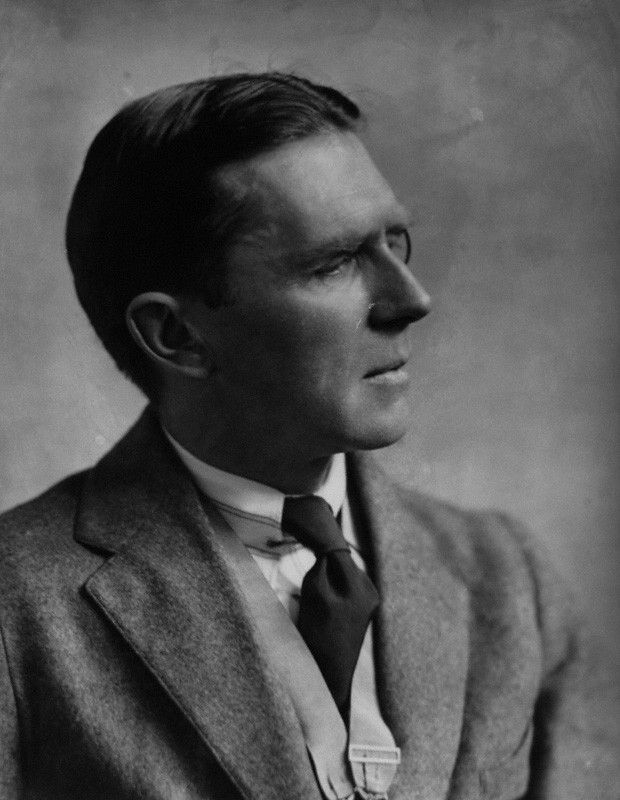
The Three Rivers Museum Trust traces the LCC's interest in Oxhey back to plans of the 1930s to clear East End slums, which the war interrupted.23 The County of London Plan, written for the LCC by J. H. Forshaw and Patrick Abercrombie, was published in 1943 and shown at County Hall that summer.94,337 It proposed rehousing hundreds of thousands of Londoners outside the capital.338
Lewis Silkin, who had chaired the LCC's housing committee, later told the Commons that the council first decided to buy Oxhey compulsorily in October 1943.96,339 The LCC went on to build a ring of 13 estates beyond its older cottage suburbs, and by 1965 they held 45,000 homes.31
Opposition
Big estates near Oxhey were being sold for building before the war. In July 1932 Lot 1 of the Oxhey Grange estate, about 417 acres, was auctioned, its 334 acres of farms and woods described as ready for early building.86
In November 1943 the West Herts Post reported opposition to the scheme, and residents of Bushey petitioned against it.31 Protest meetings were held and petitions went to Parliament.97 Opponents argued about sewage and water, and said the estate would join Watford up to London. They wanted it built across the railway in the Grimsdyke area instead, but that was not accepted.98
The argument ran in The Times and in the local press. On 20 December 1943 Dudley Stamp, the Ministry of Agriculture's chief adviser on rural land, wrote that the land was poor and that little harm would be done to farming.97,340 In March 1944 a letter in the West Herts Post backed the scheme.340 In April 1944 A. P. D. Penrose, whose family had been forced to sell the neighbouring Oxhey Grange in the slump of 1932, wrote that the scheme would be another great dormitory of houses largely of one character, housing people mainly of one income level.340
The order and its map
The order was called the County of London (Watford, Hertfordshire) Housing Order, 1943. Its deposited map, drawn on the Ordnance Survey's 1:2,500 sheets, outlines the land to be bought in red.21 The council made it under Part V of the Housing Act, 1936.97 The line follows the railway on the east and the Middlesex county boundary on the south, runs along the western edge of Oxhey Woods, and steps across the open ground to the north. The words "Golf Course", Big Wood and the golf club house all sit inside it, while Oxhey Lodge and the houses on the northern edge sit outside.21
The order's schedule lists the land piece by piece. The golf course and clubhouse made up about 180½ acres, Oxhey Woods, with part of Nanscot Wood, about 264 acres, and the Artizans' and General Dwellings Company's Pinnerwood Park land about 45 acres. Little Oxhey Farm, the Oxhey Rural Pig Club and a National Fire Service site were in it too.98
A small patch at the chapel beside Oxhey Place is coloured green, with a note about that land.21 A handwritten note under the map says it is the map referred to in the County of London (Watford) Housing Compulsory Purchase Order, 1944, and it is signed at the Ministry of Health in September 1944.21
The map at the top of this page is that red line, traced from a photo of the map in Poor But Proud and fitted to today's streets. Measured to the outside of the drawn line it encloses about 970 acres, a little more than the 921 acres of the order. Part of the difference is probably the width of the pen line.
The inquiry at Watford Town Hall
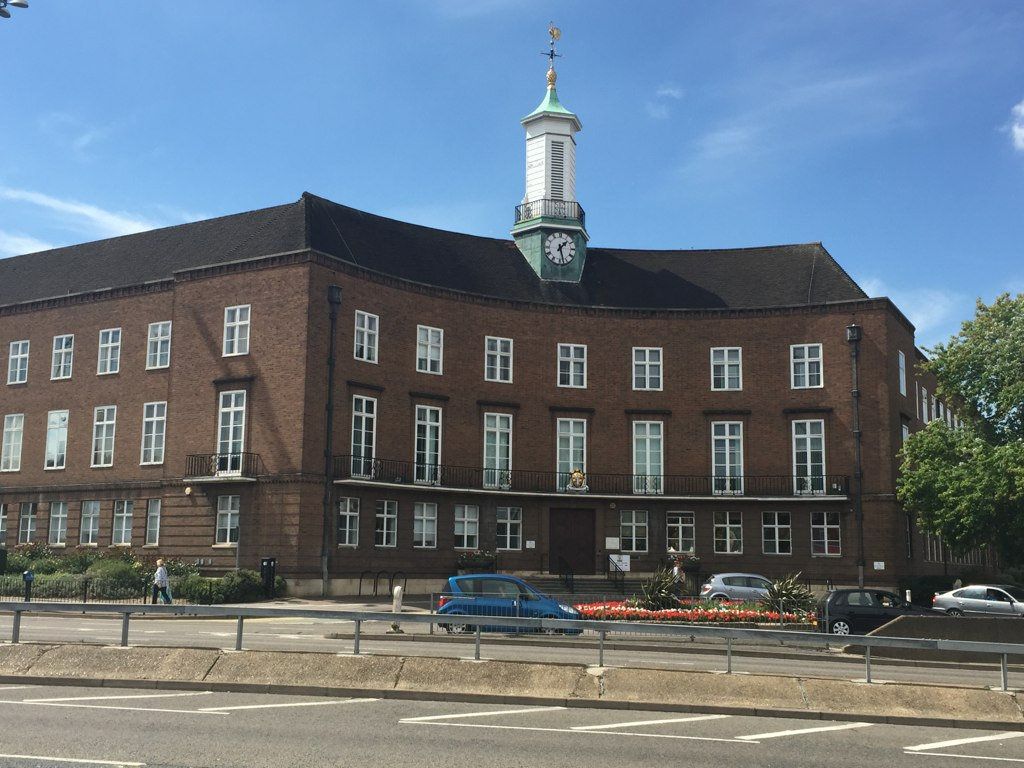
A public inquiry sat on Monday 17 and Tuesday 18 April 1944 in the council chamber of Watford Town Hall, before W. H. Collin, a retired Chief Inspector of the Ministry of Health.4,99 Our Oxhey counts eight objecting bodies, while Poor But Proud lists 17 objections, some from private people, and names the Inspector as Collins.97,98,99 The eight bodies were Watford Borough Council (the West Herts Post report of the inquiry calls it Watford Town Council), Hertfordshire County Council, Rickmansworth Urban District Council, the Colne Valley Sewerage Board, the Artizans' and General Dwellings Company, the St Albans Diocesan Registrar, the Essex, Cambridge and Herts Society of Architects, and the Blackwell trustees.99 Watford and District Trades Council and the National Federation of Building Trades Operatives spoke in support, the Trades Council speaking for 10,000 Watford workers.99,341 The federation's Watford branch had passed a resolution backing the scheme on 6 February 1944.98,99
Each side had counsel. H. G. Robertson appeared for the LCC, Sydney Turner KC for the Blackwell trustees, and the objecting councils and companies briefed their own advocates.99 The public benches held the Mayor of Watford and the chairmen of Rickmansworth and Bushey councils.99 The Watford Observer called the inquiry a decision on the future of Watford as a separate town, and gave the scheme as housing for 15,000 to 20,000 Londoners.341
The LCC's counsel said London would need 100,000 new houses after the war and that this order was a first step towards finding the land.99 He described an estate of 920 acres, 870 of them owned by the Blackwell trustees and 50 by the Artizans' company, with room for 4,000 to 5,000 cottages.99 He put the case in numbers. A survey under the Housing Act of 1935 had found 70,953 overcrowded families in London, about 81,000 by January 1937. Some 37,000 had been rehoused by the end of 1938, leaving about 43,000 when war broke out, and the council reckoned it needed 100,000 new houses with sites for only the first 16,000.99 No layout had been drawn yet, but a trunk road was expected through the middle of the site, along the edge of the wood or through it.99 The site was big enough to build on quickly, well connected and already zoned for houses in the draft planning scheme, and he quoted Dudley Stamp in The Times as seeing no difficulty for farming.99 The council promised to leave a church and its burial ground untouched and hoped to keep "a very pleasant wood".99
Watford's Town Clerk said there should not be one standard of housing for the wealthy and another for working people.99 The Watford Observer saw a fight to keep a green belt between Watford and London's sprawl.4 The secretary of the Trades Council, J. P. S. Davey, said the real objection was to working-class houses for working-class people.4,341 As the hearing closed, one of the Blackwell trustees, Colonel Spiers, promised a year's notice of any private building if the order was refused, so that Watford could keep the land open.4,341
The golf club did not object. At its annual meeting on 29 April 1944 it chose a "wait and watching attitude" rather than pay for an objection, expecting other local interests to protest to the Ministry of Health.3
Confirmed
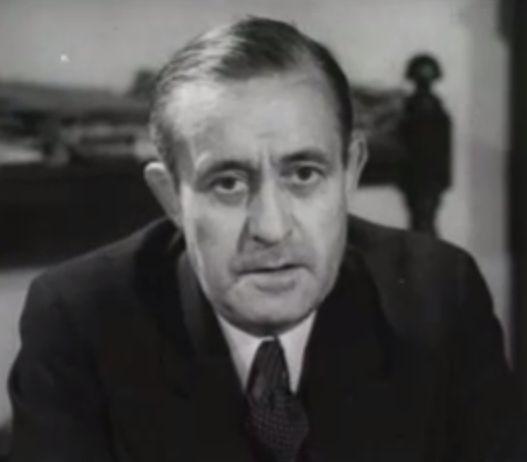
In July 1944 Oxhey came up in the Commons as an example of a hard-fought case with no decision yet. Silkin used it to show how slow inquiries were, and a planning minister called it "an admirable example" of a hotly contested one.96 Silkin said the inquiry had been held in February, but the local papers of the time report it in April.96,99
The Inspector found for the LCC.106 The confirmation order was sealed on 28 September 1944 and came into force on 1 December 1944. The Minister left out two small pieces of land, coloured green on the map.97,106 In October the local press reported that the Minister of Health had confirmed the purchase of "a little over 921 acres" for a cottage estate.4 Watford Borough Council said it would ask to bring the land into the borough, but South Oxhey never joined Watford and lies today in Watford Rural parish.4,156
On 7 November 1944, before the House of Lords went into committee on the Town and Country Planning Bill, Lord Balfour of Burleigh regretted the loss of countryside, though he did not blame the LCC.104 Later that day, in committee, the Lords came to a clause under which land that one council wanted in another council's area could be given to the local council to buy instead. Lord Latham, the LCC's leader, used Oxhey to show why that would not work. Watford Rural District Council could not have bought the land without a big rise in the rates, he said, or built the four or five thousand houses, and London wanted it for people from Shoreditch, Bethnal Green and Stepney.105 That month the Vicar of Oxhey, J. V. Langmead Casserley, wrote to The Times that the housing schemes built after the last war had three serious defects, that Oxhey was a kind of test case, and that if the new town went up its residents would be exiles.31,340
The price
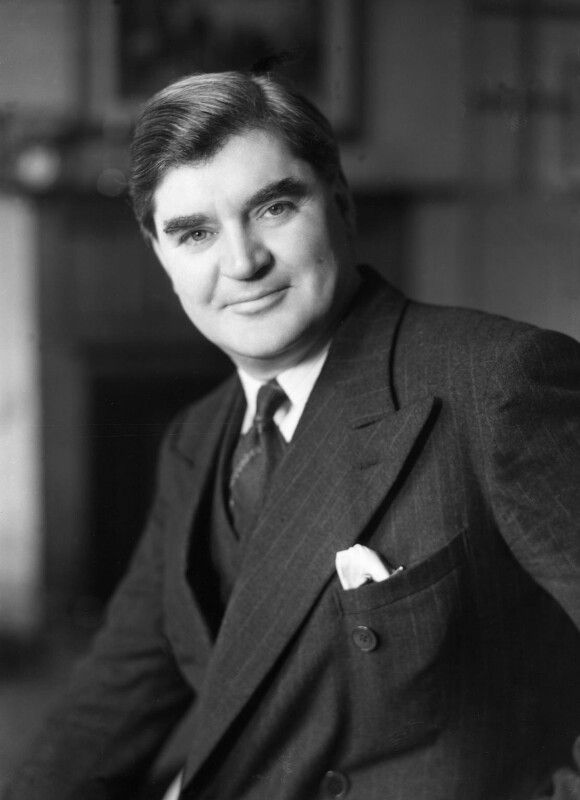
In May 1945 the Minister of Health, Henry Willink, told the Commons that the land could not be bought by agreement and that no price had yet been reached.107,342 In 1949 Aneurin Bevan gave the area as 921.275 acres and the cost of buying it as £1,406,000.22 Poor But Proud says the Blackwell trustees were awarded £199,500, with £500 held back because they could not prove title to just over 2 acres. Mrs Blackwell was paid £173 12s to leave Oxhey Place.23,88,106 We found nothing that explains the difference.
The 1946 plan
On 30 July 1946 the LCC approved an outline scheme for about 925 acres.106 About 390 acres were to stay as woods and open space, about 100 were for schools, about 63 for shops, churches, a community centre and a cinema, and about 40 for a Harrow to Watford by-pass. That left about 329 acres for 3,950 homes, at 12 to the acre, costing £5,690,750.106
Most were to be houses, with bungalows, two-storey flats and a few three-storey blocks. The plan also had a centre with 36 shops and a cinema near the station, then still the wooden Carpenders Park halt of 1914, as well as nine school sites, four church sites, a community centre around Oxhey Place and three smaller parades of ten shops.106
What the order left out
The new tenants were worshipping at the chapel from 1948, and it stayed with the Blackwell estate until the Church of England took it on in 1962 or 1963.114,158,159 Its story is told in Oxhey Chapel. Oxhey Woods lay inside the red line, but Municipal Dreams says the confirmed order kept some of the woodland.21,31 The old woods tells their story. A third of an acre of Nanscot Wood lies over the old boundary, in Middlesex.106
The golf club stayed on for a time, paying £344 10s a year in rent, and a few cottages were left standing, two at the top of Oxhey Drive and four in Gosforth Lane.106
The end of the golf course
After the order was confirmed, the golf club noted in April 1945 that the LCC could take the land as and when it needed it.3 John Swain says about 30 per cent of the course, at its east end, went for building, and the rest became South Oxhey Playing Fields in 1952.12 Oxhey Golf Club tells the whole story.