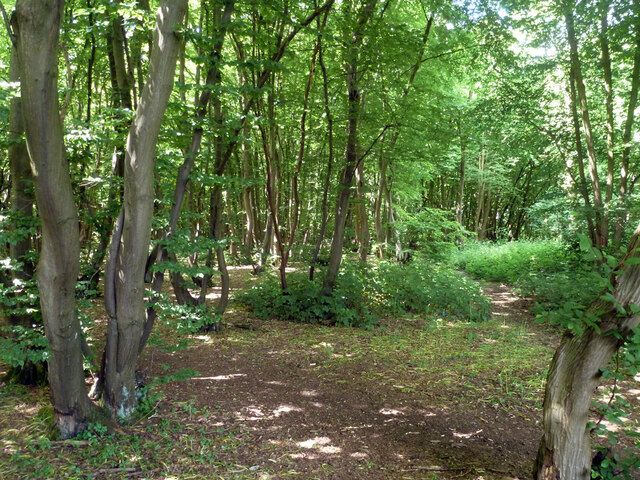
The estate the London County Council bought in 1944 came with old woods: Oxhey Woods in the south and west, a string of small woods on what are now the playing fields, and a few scraps in between. Natural England's newest list counts most of this woodland as ancient.16,261
What ancient woodland means
Ancient woodland is land that has been wooded continuously since at least 1600. Ancient semi-natural woodland is where the trees are mostly native and have grown up naturally. Ancient replanted woodland is an ancient site where the old trees were felled and new ones planted, often conifers.302,303
Natural England keeps two lists. The original Ancient Woodland Inventory was begun in 1981 and mostly left out woods smaller than 2 hectares.302 A revised inventory is now being published county by county. Where it exists it takes precedence over the original, and it maps woods of 0.25 to 2 hectares for the first time.16,304 Hertfordshire's revised data, gathered by Herts Environmental Records Centre, was published in June 2026. It found over 50 per cent more ancient woodland sites in the county than the first inventory.261
The change matters here. The original list counted only about 43 hectares of Oxhey Woods, and nothing on the playing fields or at Pond Wood. The revised list counts about 92 of the reserve's 100 hectares, and Pond Wood and several playing-field woods too. The small size of the playing-field woods probably explains why the old list missed them.16,302 Switch on the ancient woodland layer on the map to see the revised outlines.
How we know the woods are old
The council's plan for Oxhey Woods says they appear on Dury and Andrews' county map of 1766.38 Some fragments of the playing-field woods are shown on Bryant's county map of 1822.13,183 The Oxhey Woods plan also says that the Watford tithe map of 1844 shows separate parcels that have since grown into one wood, with old boundary banks still between them.38 The 1872 sale particulars list the woods, and Ordnance Survey maps of the 1870s and 1896 name almost every wood on this page.20,58,60,295
The names help too. In old woodland language a spring is a wood managed by coppicing, cut to the ground and left to regrow from the stump.305 The council's playing-fields plan reads the spring names as a sign of water, but the same plan says Ox Pasture Spring and Hampermill Spring hold the site's best old hornbeam coppice, which fits the woodland meaning better.13,305
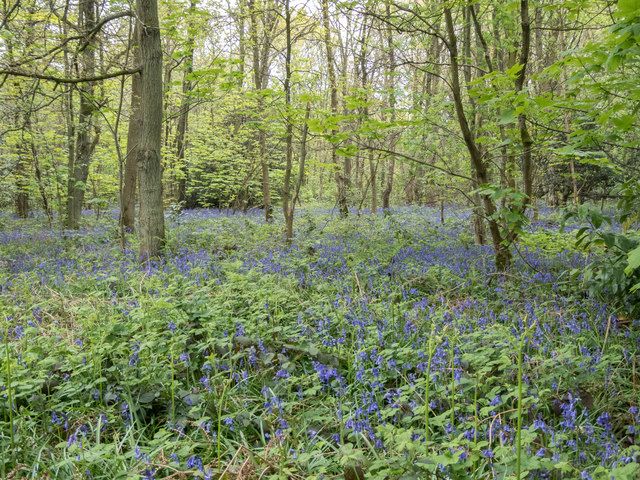
On the ground, a county survey in 2017 found old wood banks, trackways, maiden oaks and hornbeam stubs older than the plantations in all three parts of Oxhey Woods.38 Plants that tend to grow in ancient woods, including bluebell, honeysuckle, wood millet and remote sedge, are found in all three parts. Crab apple, whitebeam, midland hawthorn and wild service tree, all linked with ancient woods, grow here too.38
All this supports an age of at least 400 years. The council's web page and the county leaflet say the woods may have been wooded for up to 10,000 years, but neither gives any evidence for that.306,307
Oxhey Woods, part by part
In 1872 the owner kept 274 acres of woods, plantations and nurseries in hand. The two biggest parcels were St Mary's Hill and Hanging Woods (119 acres) and Long Raymond's, Burnt and Abbot's Woods (124 acres). Long Raymond's Wood and Burnt Wood are names no longer in use.20,38 Today Prestwick Road and Oxhey Drive divide Oxhey Woods into three parts.38
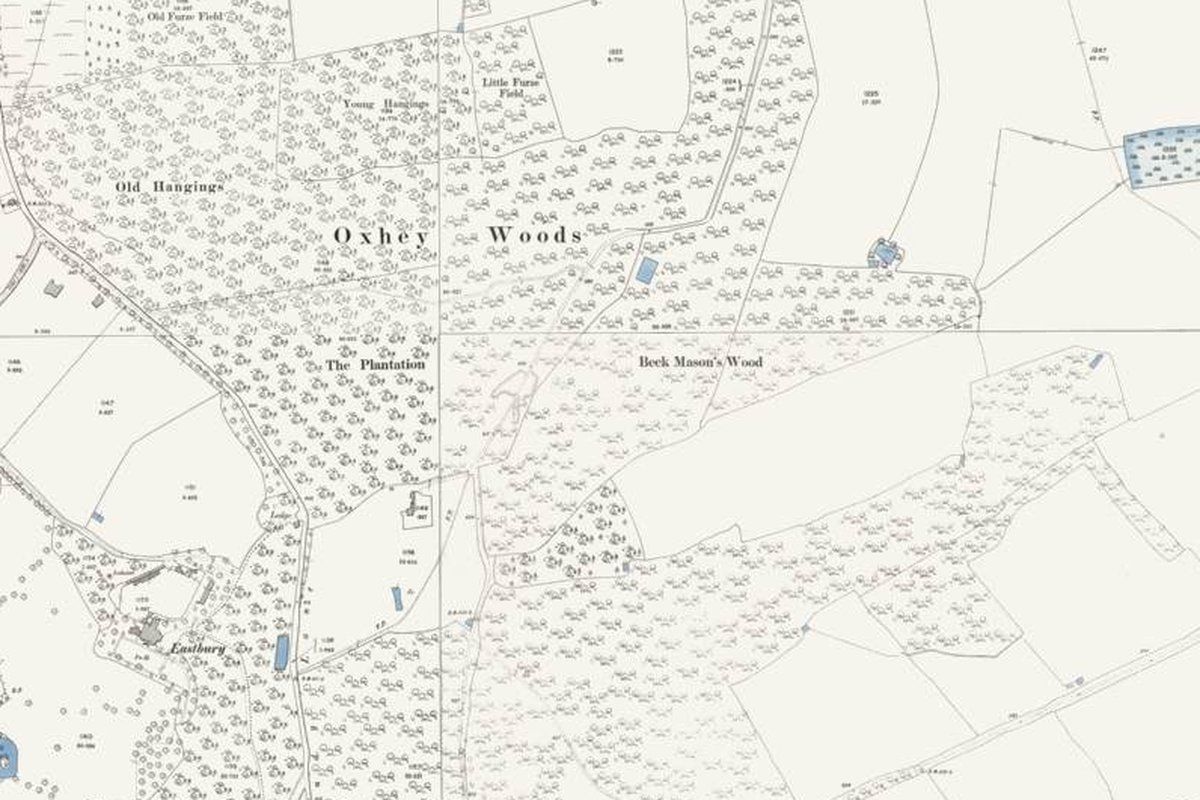
The northern woods, north of Oxhey Drive, keep the names Old Hangings, Young Hangings, Little Furze Field, Old Furze Field and The Plantation, all on the map of the 1870s.191,295,308 Almost all of this part, about 41.6 hectares, is on the revised list. Old Furze Field at the north-west tip is not, and the council's board says nineteenth-century maps show that tip as open fields.16,308
Paddock Spring is the name used locally for the corner of the northern woods entered from Gosforth Lane, beside the air training corps and army cadet huts. The estate's timber yard and sawpit stood at this entrance, as the Farms and fields page explains. Neil Hamilton, who walked it in 2013, describes an old track flanked by embankments running through to Oxhey Drive, with unusual metal fence posts and gate posts along it. Old metal fencing on the boundary with St Joseph's School has been swallowed by trees and shrubs, and he suggests it may mark the edge of the Oxhey Place grounds. He found traces of hornbeam coppicing still clear and the wood little changed after some years away.141 Hertfordshire Archives holds photographs of the wood under Acc 3898, including a view along a ditch, one up a track and a general view of Paddock Spring coppice with oak.309
The central woods, between Prestwick Road and Oxhey Drive, include Beck Mason's Wood in the west, Ashen Spring on the southern edge and, the council says, Mary Hill Wood in the east.38,191 The estate's walled nursery of the 1870s stood beside the road here, and it was probably the 3.6-acre Lower Frog Hall nursery of the 1872 sale.20,295 Beck Mason's Wood (8.9 hectares) and a strip along the south and east (7.2 hectares) are on the revised list. The rest, which includes oak plantations under 50 years old, is not listed, and the map of the 1890s shows fields there.16,38,291
The sources disagree about Ashen Spring. The council's plan calls it replanted ancient woodland, and the original inventory marked the southern edge that way. The revised inventory now calls the same ground ancient semi-natural.16,38,302
The southern woods, south of Prestwick Road, are Abbott's Wood and Nanscot Wood. Natural England's revised list calls this part Oxhey Wood. Abbott's Wood keeps the name of the 1872 Abbot's Wood.16,20,38 The revised list takes in 34.1 hectares here, almost the whole of this part, where the original list had only its western part.16,302 The council's plan and a ParksHerts map place Nanscot Wood east of Abbott's Wood, but the ParksHerts text puts it "in the north west corner".38,191
Fragments in private gardens. Three small ancient parcels, together about one hectare, lie among private houses just west of the southern woods, and on the map of the 1890s they fall inside the wood. They are private land, not places to visit.16,191,291
The woods on the playing fields
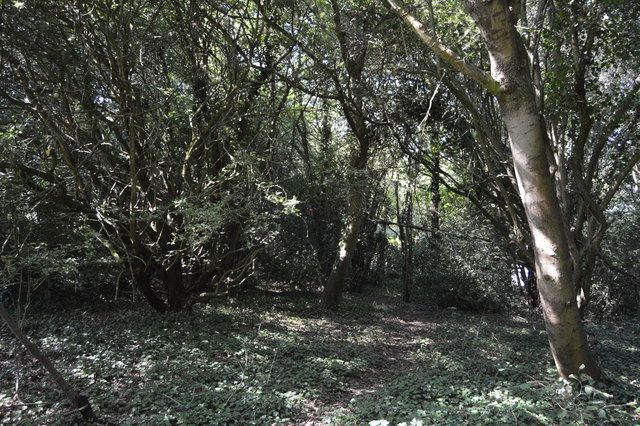
The Ordnance Survey map revised in 1896 names Big Wood, Hampermill Wood, Hampermill Spring, Round Spring, Long Spring, Poorfield Spring, Leyfield Spring and Ox Pasture Spring on this ground, with Warren Dell at the east end.58,60 The council says the woods were bigger before 1900, and that building the golf course probably reduced them.13,183 Their ancient features make them a Local Wildlife Site.13
Big Wood, Hampermill Wood, and Hampermill Spring with Round Spring are all on the revised list as ancient semi-natural woodland. Their outlines match the 1896 map closely. Big Wood now looks larger because younger trees have grown up round it.5,16,60 Big Wood has oak, ash, hornbeam, birch and wild cherry, and an old chalk pit whose story is on the Farms and fields page.13
Two woods have had mixed reports. The council's 2019 plan called Long Spring lost, yet the revised list keeps a small wood by the Hampermill Lane entrance that matches the north end of Long Spring on the 1896 map.16,60,170 The council's 2023 briefing lists Round Spring among the woods the site had before 1900, but its 2025 village green news names Round Spring as a wood that survives, and the revised list covers it.15,16,183
Ox Pasture Spring, along the northern edge, has the best old hornbeam coppice on the fields, the council says, and an ancient wood bank on its south side. It is still on neither list.13,16,302 Poorfield Spring, Leyfield Spring and Warren Dell are not listed either. OpenStreetMap shows a small unnamed wood on the Warren Dell site today.16,310 The fields' later story, including their village green status, is told in The playing fields.
Pond Wood and the smaller woods
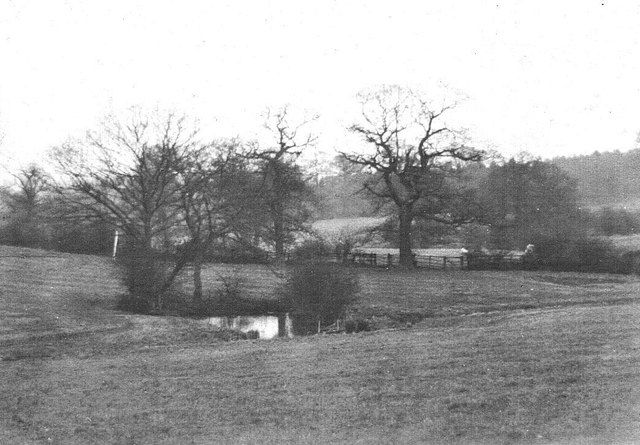
Pond Wood, at Northwick Road and Seacroft Gardens, was a plot of the Oxhey Place farm in 1872, beside a large pond called Park Pond.20,295 A local historian on Our Oxhey thinks the wood takes its name from Park Pond on the old maps, and calls the hollow a natural place for water off the higher ground of Oxhey Woods to drain to.296 Readers of a six-inch map of 1899 place the wood behind today's police station.290
Pond Wood is known for old pollarded hornbeams, which were still being cut in the estate's early years.296 Our Oxhey's account of pollarding explains the method here as cutting the stem about two metres up so the tree throws fresh shoots, which thickens the trunk if it is repeated over the years, and it points to a good old example at the junction of Northwick Road and Seacroft Gardens.296 Natural England's revised list now counts its 1.6 hectares as ancient semi-natural woodland, on an outline that matches the wood on the maps of the 1890s.16,291
The map of the 1890s names a Sandpit Wood on each side of the railway.291 The western one was inside the LCC's land, and by the 1960s it had been largely built over.21,165 A thin strip inside its old outline is on the revised list as ancient replanted woodland. A second small replanted strip north of Gosforth Lane matches the southern of two woods the 1896 survey calls Ox Pasture Spring. Natural England leaves both strips unnamed, so the names are our reading of the old maps.16,291,311
| Wood | Revised list (2026) | Area (ha) |
|---|---|---|
| Oxhey Woods, northern part (the Hangings, Little Furze Field, The Plantation) | Ancient semi-natural | 41.6 |
| Old Furze Field (northern tip) | Not listed | none |
| Beck Mason's Wood | Ancient semi-natural | 8.9 |
| Central part, southern and eastern strip (with Ashen Spring) | Ancient semi-natural | 7.2 |
| Central part, younger oak | Not listed | none |
| Southern part (Abbott's Wood and Nanscot Wood) | Ancient semi-natural | 34.1 |
| Fragments in private gardens (three parcels) | Ancient semi-natural | 1.0 |
| Big Wood | Ancient semi-natural | 1.05 |
| Hampermill Wood | Ancient semi-natural | 1.24 |
| Hampermill Spring and Round Spring | Ancient semi-natural | 1.50 |
| Long Spring (north end only) | Ancient semi-natural | 0.66 |
| Ox Pasture Spring (northern edge of the fields) | Not listed | none |
| Ox Pasture Spring (southern strip, north of Gosforth Lane) | Ancient replanted | 0.33 |
| Poorfield Spring, Leyfield Spring and Warren Dell | Not listed | none |
| Pond Wood | Ancient semi-natural | 1.58 |
| Sandpit Wood (surviving strip) | Ancient replanted | 0.29 |
Areas are Natural England's. The whole Local Nature Reserve is 100.21 hectares, about 92 of them on the revised list (the four reserve rows above, the northern part, Beck Mason's Wood, the central strip and the southern part, are rounded and add to 91.8).16,192
How the woods were used
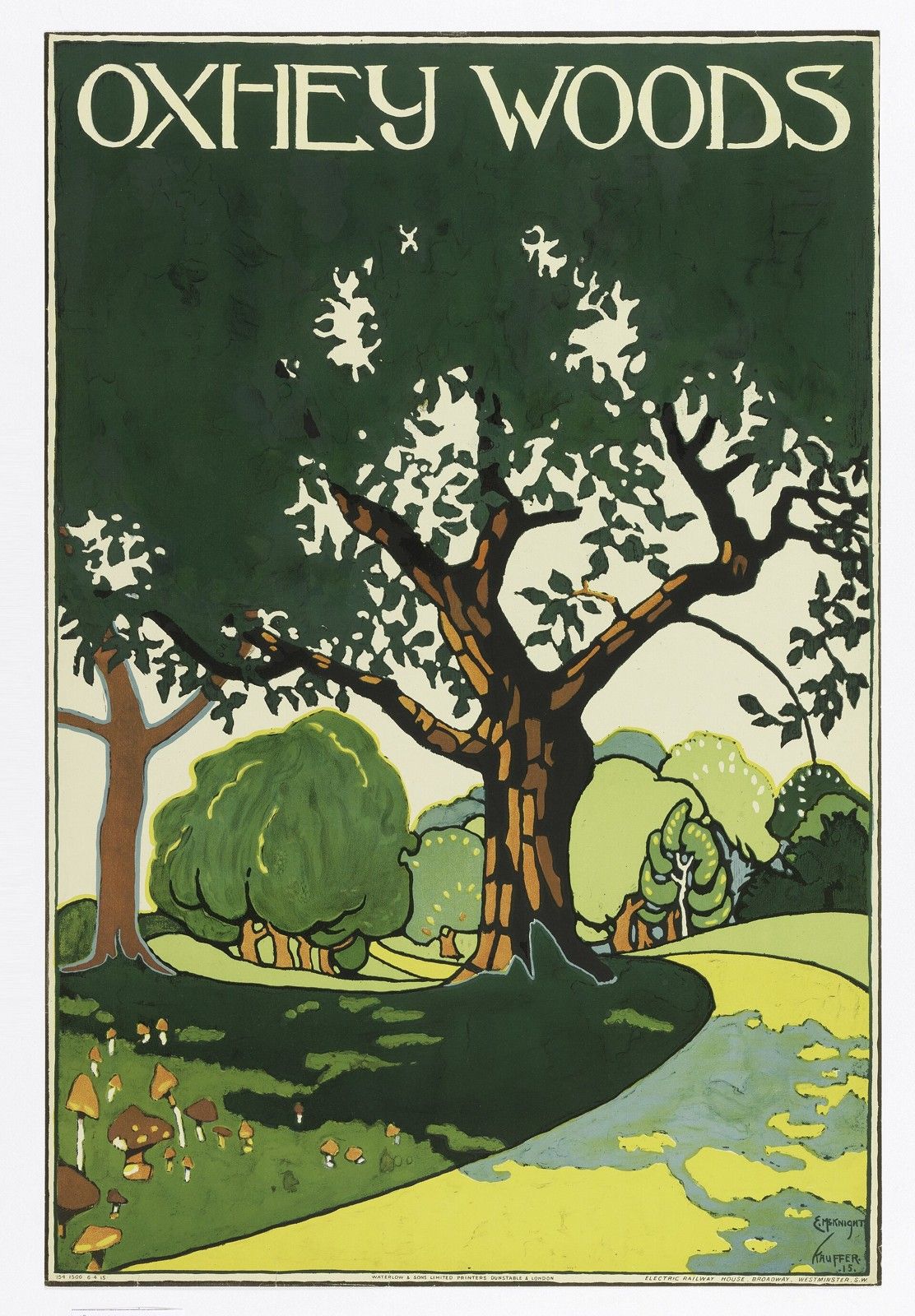
For centuries hazel and hornbeam were coppiced for fuel under oak trees left to grow tall, and the council says this mattered to the local economy until the early 1900s. It suggests the woods' busiest time was the seventeenth century, when London wanted charcoal, though it gives no evidence.38
In 1872 the woods were "famous for woodcock", laid out with drives and walks, and gave very fine underwood. A large sum had lately gone on nurseries, new plantations and young trees, and the timber and nursery stock were valued at £10,000.20 The estate's timber yard is on the Farms and fields page. The council's plan says a wide strip of the northern woods was cleared in the 1930s for a road that was never built, and sycamore grew up in its place.38
When the LCC's plans were heard in April 1944, the Watford Observer reported that the council wanted "the beautiful Oxhey Woods" as part of the site. The LCC's counsel said it hoped to keep "a very pleasant wood".4,99 The woods survived as the estate's edge, but ParksHerts says active management declined after the war.191 The playing fields passed to Three Rivers District Council in 1989, though the council's 2024 plan dates the takeover to 1974.13,183 Work there has been mostly limited to tree safety, so the hornbeam coppice has grown up into dense stands.13,183
What the woods are like
Oxhey Woods stands on London Clay, with Stanmore Gravel in the south-west. The soils are acid and wet in winter, which is why the woods have fewer kinds of wild flower than woods on richer ground.38 John Swain puts about 75 per cent of the whole estate on thick London Clay, thinning to the north and north-east towards the old village of Oxhey, where a narrow band of Reading Beds with patches of later gravel lies over the chalk. He gives that as the reason the sudden holes that opened in gardens near the old village in 1927 are unlikely on the estate itself, though residents writing on Our Oxhey remember holes opening on the old golf course, one in the mid 1960s.312
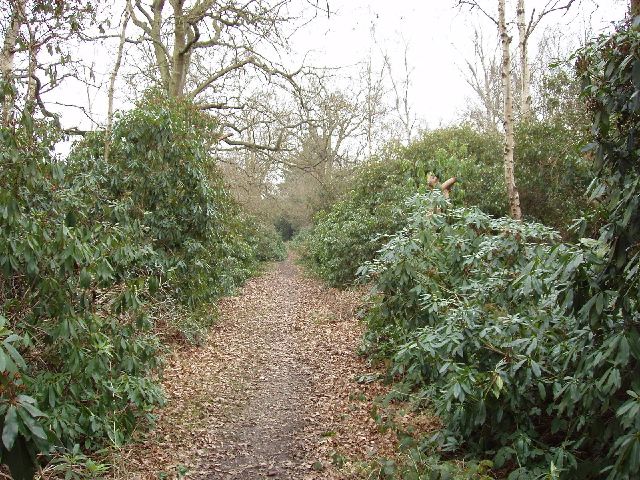
The Victorians left their mark. In spring 1889 H. J. Foley crossed a clearing of mossy, polled hornbeam stumps and followed a little-used gravel road through the heart of the woods, the line of today's Oxhey Drive. Along it he saw oaks, "of smaller stature" than at Eastbury, with an ash or a flowering cherry over thickets of hornbeam and hazel, then birch, spruce, larch and rhododendron, a "placid woodland pool" and masses of bluebells.57,295 Scots pine, Corsican pine and Norway spruce still stand in the northern woods, and old larch survives in Ashen Spring, but no source dates any of them.38 The council says rhododendron, brought in by the Victorians, is a problem, and thinks the Rhododendron Walk comes from nineteenth-century planting.38
The clay is felt underfoot. Writing in 2012, a former resident remembered walking the woods as a boy in the 1950s, the views from the highest points north towards Watford and south into London, and the thick mud the London Clay makes after rain.313
Much of Abbott's Wood is tall, open oak over younger birch, with beech further east. Nanscot Wood is hazel coppice under mature oaks, full of bluebells. The central woods are mostly oak, with old hornbeam stubs along the internal banks. The northern woods move from oak and sweet chestnut to hazel, ash and hornbeam coppice.38
Old records show 15 ponds in Oxhey Woods. Today there are two permanent ponds, in the southern and central woods, and a few newly dug seasonal ones.38
The nature reserve
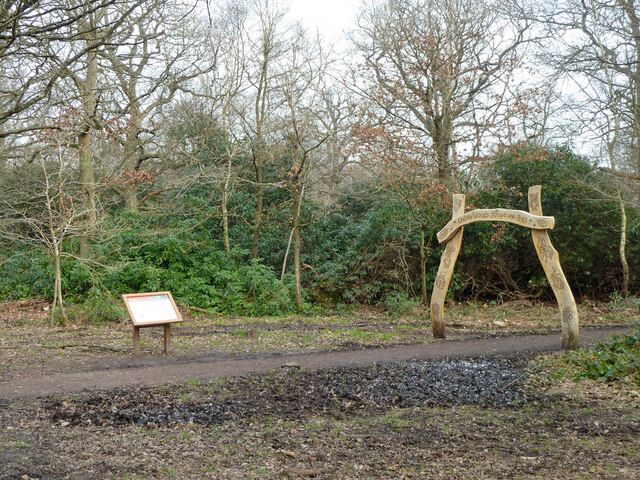
Three Rivers District Council declared Oxhey Woods a Local Nature Reserve on 13 June 1997. Natural England gives its area as 100.21 hectares, though other sources give figures between 96.5 and 100, for the reason given below.38,191,192 It is also a Local Wildlife Site, described in the council's plan as one of the most important oak and hornbeam woods in Hertfordshire.38
A £196,715 project from 2010 to 2012, funded by the Forestry Commission, the council and the Heritage Lottery Fund, improved paths and information, and the one-kilometre easy-access sculpture trail was open by late 2012.38,313 Local people noticed. A resident who had kept away for years because the woods were so overgrown wrote in November 2012 that the firm paths and the wooden sculptures had made them worth walking again, and a local historian and a former resident agreed that they looked better cared for than in the estate's early years.313
The district council owns nearly all of the woods and does the work there, with a small corner in the north-east in county council hands, which is why the council's own figure is 96.5 hectares against Natural England's 100.21.38,192 The county's Countryside Management Service writes the plans, runs a midweek volunteer group and supports the Oxhey Woods Conservation Volunteers, a Friends group that works on the first and third Sunday of each month.38,314,315 The plan for 2022 to 2027 aims to control rhododendron, cherry laurel and Japanese knotweed, bring back hazel coppicing to help the bluebells, and care for the veteran hornbeams.38 The council also plans to bring back rotational hornbeam coppicing on the playing fields.13,170 Muntjac and grey squirrels strip bark from the old hornbeams, and oak processionary moth has reached the woods.38 For walks and the sculpture trail, see Visit and look for.
Wildlife worth knowing
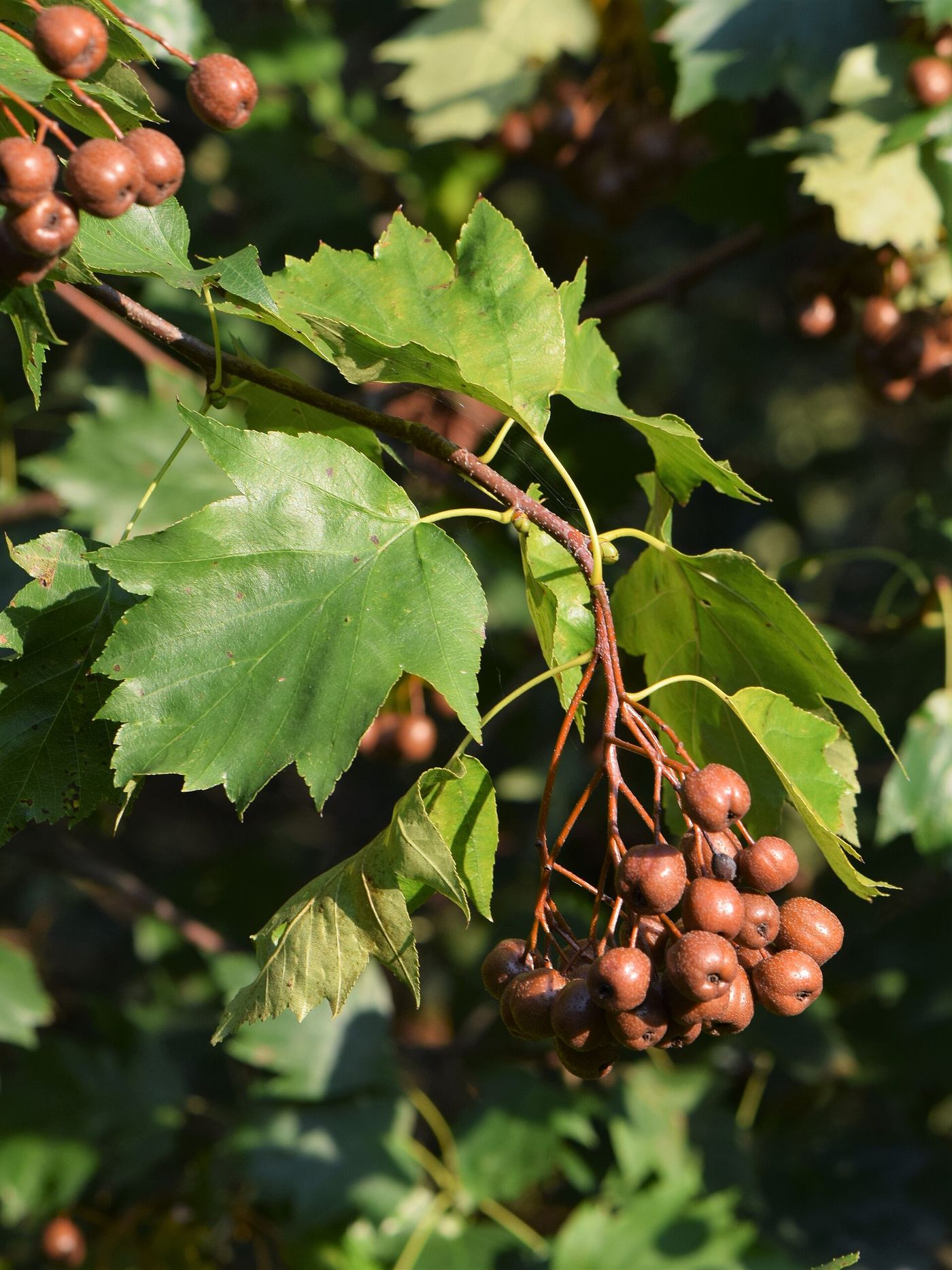
Oxhey Woods is known for its wild service trees, whose leaves and berries make the reserve's logo. ParksHerts says it is believed to have the county's largest population, and botanists recorded the tree here in 1987 and 2001.191,308,316 The volunteers say a 1979 survey found 109 kinds of fungi.314,315 The council's plan records common pipistrelle, noctule and brown long-eared bats, and plants such as pill sedge, scaly male-fern and southern wood-rush. It says the woods are of county importance for mosses and liverworts.38