South Oxhey was built before its shops. For the first years families bought their food from vans, and the parades, the precinct, the post offices and the pubs arrived one at a time between 1949 and the early 1960s.25,113,523 The library and the doctors came the same slow way, and this page follows them too.
Shopping from a van
For the first years the shops came to the estate on wheels. A resident who moved in during 1948 says Barkers of Watford parked its van on the spot that was the main car park when she wrote in 2012.479 Barkers was still calling in the 1960s, and residents remember the van sounding its horn as it arrived, the owner in a white coat, and a lad who worked on the van taking pre-ordered groceries to the doors.591 Lipton's ran a mobile shop as well as Barkers, and Hertfordshire Libraries hold photographs of a mobile shop on the estate in 1949.592 The Co-op sent a van too, and ran a shop from a caravan in Henbury Way until the permanent shops opened.479,483,494 Express Dairies brought groceries round twice a week in 1951, and a greengrocer called because there was nowhere else to buy vegetables.116
Some of the travelling shops were whole coaches. Customers climbed in at one end, walked through picking what they wanted and paid at the other.523 A fish and chip van came round in the evenings, and people queued and talked while they waited.130 The coalman, the insurance man and the rent man all called weekly.130 Milk and coal arrived by horse and cart at first, and children were sent out to collect the manure for gardens and allotments.592 One resident remembers the Tonibell ice cream van, and a rag and bone man who gave children a goldfish for old rags.523
Rationing outlasted the move. A resident who arrived in 1950 registered her ration book at Pearks at Carpenders Park and thinks rationing ran on until about 1954.481 A family who arrived in August 1951 found the nearest shops and bus stop were at Little Oxhey Lane, so door to door salesmen called often.473 The same family remembers queuing at the butcher for cheap corned beef and trying to get a marrow bone to make soup, and a resident who came in 1952 says there was not much to buy anyway, because food was still rationed.473,483 One family left a list and their ration books on the doorstep for a daily delivery and walked to Brazier's farm to settle the bill, then deserted the farm once the estate shops opened because the shops were cheaper.593 People walked or pushed prams to the gas works for cheaper coke, and one remembers crossing the old golf course with a pram to buy new laid eggs at the farm.486,523
The first shops, in Little Oxhey Lane
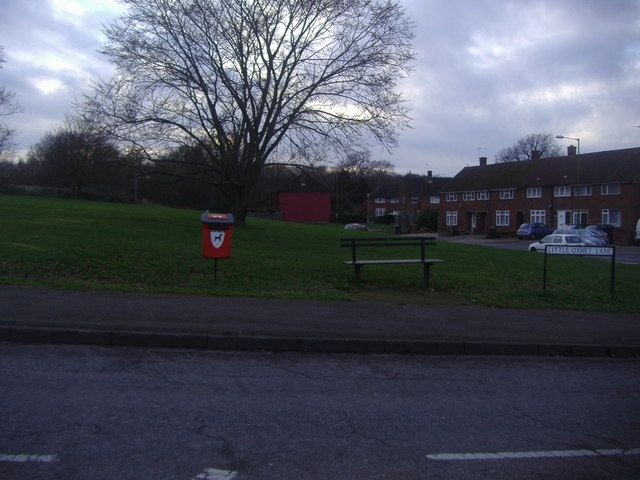
The estate's first three shops opened in Little Oxhey Lane in April 1949, and a post office followed on 3 July 1950.113 That was still almost all there was. A Hertfordshire Education Committee report of June 1951 called the estate soulless, with only six shops for 14,000 people and, after three years, just one small cafe and no public conveniences.113,142 The argument ran on in the newspapers, with some residents saying they did not want another Commercial Road of pubs, shops and picture houses while others pressed for shops of any kind.142
The little parade grew. A resident's husband did a newspaper round from a shop there that was then just a shed.480 Photographs of 1960 show the staff of Pinner Green Bakery in the row of shops in the lane.594 The 1960s Ordnance Survey marks a post office in the parade, and shops still trade under the flats.5,165,595
Doctors, the clinic and the health centre
The estate's first doctors and its baby clinic worked out of Oxhey Place, the Blackwells' old mansion that people called the Big House.118,279 A resident remembers being taken there as a small child to see the doctor and to collect tins of powdered baby milk and cod liver oil, and how hard the pram was to push over hardcore and ash.281 Another took herself there as a young girl, and a third remembers having his hair combed for nits there at four or five, the comb dipped in Dettol, by a nurse in a starched apron and head dress.279 One account puts the very first surgery in a stable-like building beside the house.118
Health worried the authorities in the early years. Looking back in 1996, the Watford Observer said a medical report of 1950 counted 125 cases of tuberculosis in a population of about 6,000, and noted that the soil in the area was not ideal for treating the disease.142 Of 171 cases reported across south west Hertfordshire in 1954, more than 49 per cent were on the estate.142
General practice was spread across ordinary houses for years. One doctor held his surgery in his own house at the end of Heysham Drive, and the practice worked from a house in Prestwick Road near the bottom of Kilmarnock Road before it moved to the surgery in Oxhey Drive past the police station.118 Two residents remember the early surgeries differently. One resident who arrived in 1952 places a surgery at the top of Fairfield Avenue in the old farmhouse, and another puts one down Gosforth Lane and along a path at the side.130,483
Residents remember several of the first GPs by name, among them Dr Eric Trimmer.118 A study of general practice on a new housing estate, cited on Our Oxhey and reprinted in the Journal of Epidemiology and Community Health in 1996, counted six doctors on the estate, five in a partnership and a sixth working from a house he occupied there.118 People remember waiting rooms where everyone sat in a horseshoe and moved along a seat as each name was called, and GPs who came out on house calls at night and at weekends.118 Dr Trimmer went on to write popular medical books, among them Having A Baby in 1974.118
A new health centre was finished late in 1957, and a club for new mothers met at the clinic in 1958 and 1959.119,486 Oxhey Place burned down in 1960.153,596 In the early 1960s a dentist practised in Bromborough Green.429 GP practices now work from South West Herts Health Centre and The Consulting Rooms, both on Oxhey Drive.597,598
The library
Books came round before the estate had a library. A mobile library nicknamed Dumpo called on Wednesdays, run by a driver librarian and a young assistant, and residents remember it as surprisingly well stocked and willing to climb the hill at night with a book someone had asked for.599 Another remembers a weekly van with books that borrowers had to sign for.130
The estate's first library opened in June 1951 in a former farmhouse in Little Oxhey Lane, with two rooms up and two down, an outside lavatory, a hot plate for the kettle and upright paraffin heaters for warmth.113,125 The junior library was upstairs on thick brown lino, the front of the building was whitewashed with bare brick at the sides and back, and the roof was slate.125 The back yard was let to a neighbour who kept chickens there, cattle were tethered to the back wall, a cattle bridge led to the field, and cows sometimes wandered in at the open back door.125 The senior assistant, known locally as the library lady, served the library for twenty-five years alongside one colleague.125
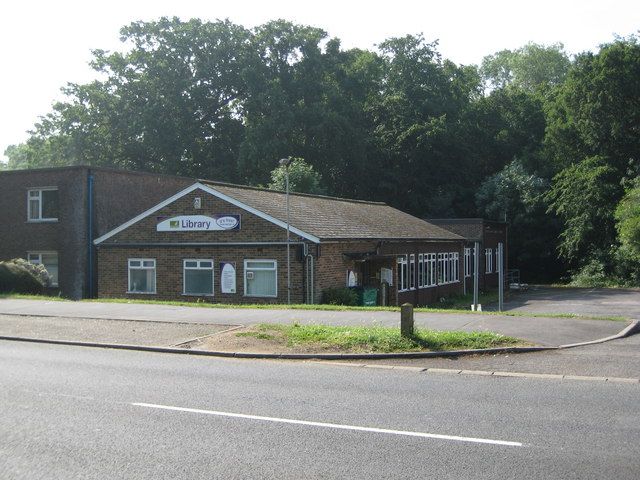
In November 1957 the LCC sold Watford Rural District Council the plot at Fairfield Avenue and Bridlington Road, the future library site, for £2,500.126 The new library opened there in May 1962, although Poor But Proud gives 20 June.119,125 The old farmhouse came down later, to make the road up to the new swimming pool.125 That pool was the Sir James Altham Pool in Little Oxhey Lane, which opened in 1979176 and did not reopen after 2020.600,601 Farms and fields works out which farm the library building had been part of.
The Bridlington Road library was extended in 1979.119 In 2007 Hertfordshire County Council won £1.4 million from the Big Lottery Fund's Community Libraries programme to remodel and expand it.196 Consultants spoke to more than seventy people in South Oxhey in February and March 2008 about what they wanted from a library.196 Two artists asked the same question in pubs, shops, schools, launderettes, homes, halls and offices, and the answers were published in June as The South Oxhey Library Book and delivered free to local households.197
The library closed in the summer of 2008 and the service moved to a smaller temporary building at 39 Oxhey Drive, where staff worked with reduced stock for a year.198 That building, next to the police station, had been the Civil Defence headquarters, with rooms and garages for its ambulance.199,211 Building work on the library began in October 2008.196 The remodelled library opened on 5 September 2009 with more than 800 visitors on the first day, an IT suite, a community room and self-service issue.196 It was formally opened at half past three on 26 October by County Councillor Keith Emsall, with the Big Lottery Fund represented, and the comic poet John Hegley performed that evening with a local double bass player.204 It is still the county council's library for the estate.602
The post offices
A resident who arrived in June 1951 remembers walking over to Carpenders Park to use the post office, because the estate's shops were not all finished.130 In May 1952 Parliament was told that the estate had one sub-post office and seven letter boxes, with more promised.134 The main post office opened on 7 January 1955.126 The post office at the corner of Prestwick Road and Oxhey Drive came down with the rest of the old centre in the winter of 2020 and 2021, as Rebuilding the centre tells.245,380
Prestwick Road
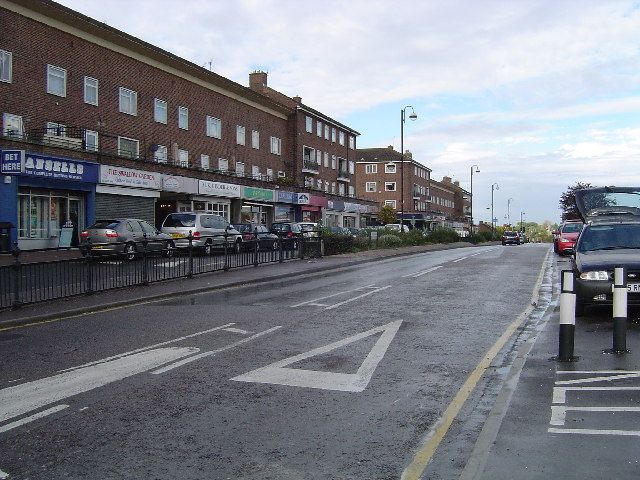
Two shops, a bank and an off-licence opened in Prestwick Road in 1952.142 Looking back in 1996, the Watford Observer said the Watford traders who had been running the vans were resented once the estate had shops of its own.142 A resident who grew up in Prestwick Road remembers a grocer called Hinkins, once the local shops were built, for its cheap tins of broken biscuits, though she does not say where it stood.129 The bank was the estate's first Barclays branch, on The Parade, standing on the site a betting shop later used, and it moved to Station Approach in the early 1960s.143 In September 1990 the government confirmed that Three Rivers District Council could sell the Prestwick Road shopping centre to its tenants for £440,000.119
Hallowes Crescent, from 1951
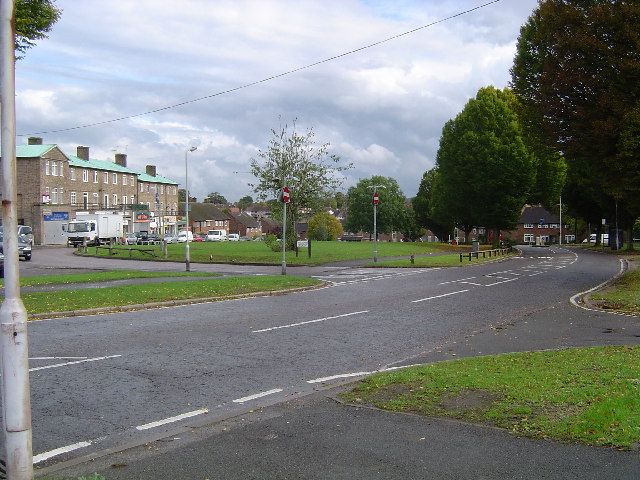
The parade at Hallowes Crescent served the west end of the estate, and it opened earlier than most accounts of it say. The 1952 edition of Kelly's Directory of Watford lists all eight shops with their trades, and states that the details were correct as from 11 June 1951.603 Poor But Proud gives 1953, and Our Oxhey says the parade opened early that year.119,133 John Swain's family moved into the police house in Hayling Road on 28 February 1953, and he remembers the shops already giving the impression of having been up and running for some time.603 The directory is the firmer evidence, so the parade was open by the middle of 1951, and it soon became the Swains' main shopping centre.133,603
Kelly's sets out the whole parade, and the eight trades are the same in 1952 and 1953: a fishmonger at 24, Gerrard's the greengrocer at 22, Peark's the grocer at 20, Gill the baker at 18, Kingston's the butcher at 16, Forbuoys the newsagent at 14, Leiper the chemist at 12 and Mace's hardware at 10.603 The 1953 edition lists a fishmonger at 24, Gerrards fruiterers at 22, Pearks Dairies provision merchants at 20, a baker at 18, Kingstons butchers at 16, Forbuoys newsagents at 14, a chemist at 12 and Mace's hardware and domestic store at 10.133 A serious fire that year drove the fishmonger out of the end shop, and a wool store eventually took the unit.133 No sub-post office is listed at number 10 until at least 1953, and by 1956 the baker had changed hands and a sub-post office had been added to the hardware store, with the rest of the parade unchanged.133,603 By about 1960 the butcher was trading as Tolly (Oxhey) Ltd, a different baker held number 18, and nothing at all was listed at the fire-damaged number 24.133
Residents' memories mostly match the directories. One lists Mace's hardware with the sub-post office, a greengrocer, a butcher, a baker, Forbuoys the newsagent and tobacconist, Pearks the grocer and a chemist, though that resident thinks the end shop was first a haberdasher and later an off-licence, where the directory has the fire-damaged fishmonger's and then a wool store.132,133 The baker baked on the premises and opened for a couple of hours on Good Friday morning to sell hot cross buns straight from the oven.132 Pearks sold loose tea and sugar, and biscuits from tins set along the counter, one of them broken biscuits.132 The chemist made up his own pills and potions and was often the first person a family turned to when a child was hurt.132 A post office still trades in the crescent.604
The main precinct
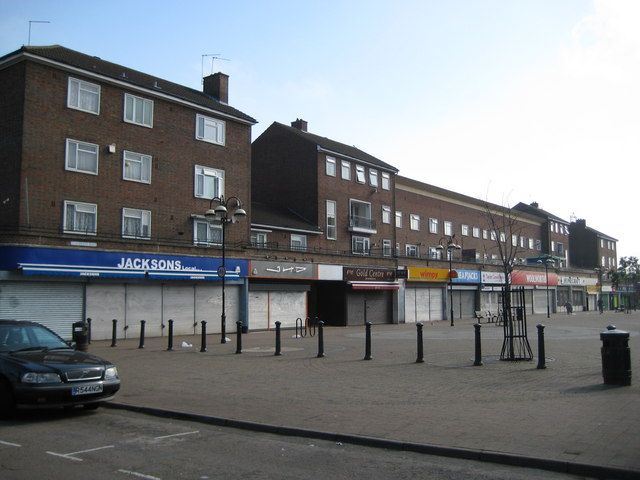
Poor But Proud dates the start of work on the main shopping centre to 1953, near the station, around St Andrew's Road and Bridlington Road.25,119 The Three Rivers Museum Trust gives 1952 for its opening.23 The local historian Neil Hamilton rescued the LCC's shopfront papers from the Oxhey Drive depot as it was being demolished, and they include quotations and drawings for the fronts planned in St Andrew's Road and Station Approach, two of them for shops at 2 and 22 St Andrew's Road.458 Locals called the new centre the big shops.25 One resident remembers the Bridlington Road side being called the new shops, although it was barely newer than Hallowes Crescent.132
By the late 1950s the centre had a self-service Sainsbury's that employed a uniformed commissionaire to open the door, a record shop, a fishmonger, a bicycle shop, Woolworths, a ladies' hairdresser, a barber, a jeweller, two newsagents and a fish and chip shop.132 The fish and chip shop had an eating area at the back, and in one school holiday it sold children a plate of fish and chips for a shilling, the price of a school dinner.132 Boys were sent to the barber in the precinct, though for a while after the first shops opened the nearest barber had been across the railway.132,434 Other shops people list are an Express Dairy shop on the site a butcher later took, Pearks, Lipton's, a Tesco next to the washing machine shop, the Co-op and Boots.605 A resident who worked in the local Co-op remembers the overhead railway that carried cash from the counters to the cash desk and broke down whenever the shop was busy.486
A girl not quite sixteen who started at Boots the Chemist in St Andrew's Road about 1960 or 1961 describes counters round the walls and photographic, chemist, pharmacy, surgical and cosmetics sections, with a fitting room behind the surgical counter for stockings and trusses.211 Boots stood between Sainsbury's and Lipton's.211 The Co-op had its own chemist's shop in the small unit that later became the undertaker's, and Giles the electrical shop, on the end of that block, became a sports shop and then a chemist.211 Next to Sainsbury's were a wet fish shop and the Melody Corner record shop, then a bakery, and the corner of that block was Gilmore's the gents' outfitters.211 The same resident later named that bakery as the ABC, with Pinner Green Bakeries further up the same side.462 She also remembers two wool shops and a shop called Super Linens, which sold curtain net, fabric and bed and table linen a few doors from the unit that became the Oxfam shop.462 Kelly's directory for 1960 lists G. W. Thompson, house furnishers, at 8 to 10 St Andrew's Road, between Maypole Dairies and Woolworths.446
Woolworths gave local children their first jobs. A boy's Saturday work there in about 1964 was in the stock room, baling flattened cardboard in a press and staying late every few months while the manager oiled the wooden floor.498 One resident worked in the estate greengrocer's for twenty years while her husband drove a milk round for the Express Dairy for thirty-nine.605 The London Picture Archive, once the City of London's Collage, holds LCC photographs of the estate's shops taken in 1963.470,606
In October 1966 St Andrew's Road was closed to traffic to make a pedestrian precinct, said to have been the first in Hertfordshire.119,126 The first Oxhey Week was held in May 1971, amid fears that the main shopping area was running down.119 A couple bought the hardware shop in Bridlington Road in 1973, lived in the flat above it and sold paraffin from a dispenser, loose nails and screws, bags of wood and coal, light bulbs, pots and pans and bedding plants.607 The Oxfam shop at 3 Bridlington Road opened about 1975 and was possibly the first charity shop in Oxhey.171 It survived both a fire and a flood, and marked forty years in March 2015 with about twenty-five volunteers on its books, one of them of nearly forty years' standing.608
Market day was a Thursday, with stalls in Bridlington Road and in the precinct.609 In June 2009 the shops along the parade in St Andrew's Road were Jacksons, a gents' hairdresser, the Gold Centre, Wimpy, Cheapjacks, Taylor Convenience Store and Homecraft, with the Woolworths unit standing empty after the chain closed at the start of the year.462 A resident who came to the estate in 1967 missed Woolworths after it closed, and felt it made a big difference to the shopping.610 A long-standing resident lists what else had gone by then, among it the ladies' shop, the men's shop, the wet fish shop, the shoe shop and the children's shop, with eating places taking their units.477 By July 2011 Boots had closed and the Peace Hospice charity shop had its unit.211 The precinct was demolished in stages from 2018, and Rebuilding the centre tells that story.
Station Approach
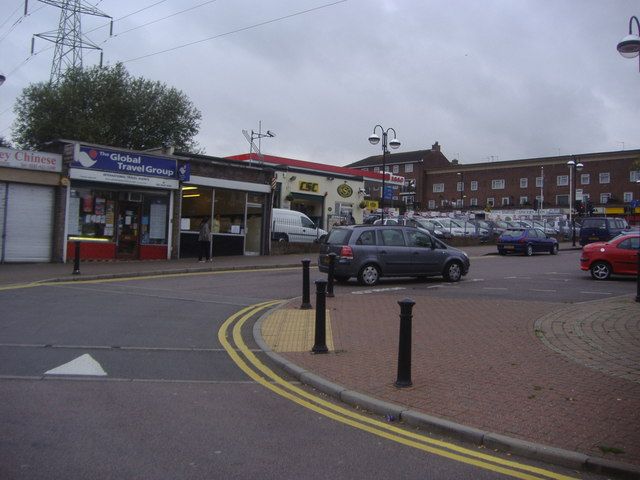
The shops at Station Approach opened in 1954, the year the new station was formally opened.126 Barclays moved here from Prestwick Road in the early 1960s, and a member of staff who worked in both branches between 1963 and 1972 lived in the flat above the bank.143 A second barber opened on the approach, along with a radio and television shop called Signal Service.132 Residents remember a toy shop near the station called Spantoy, and one of them knew it as Foxleys too but is not sure which name came first.611
On 16 October 1965 Roger Moore, then starring in The Saint, opened a television shop at Station Approach as a friend of its owner and was mobbed by children, some of them crushed against the window, although Our Oxhey's page still describes the day as a South Oxhey fete.164 Barclays closed early in 2015, and the buildings in Station Approach came down in 2017 for the new station square.143,612 Rebuilding the centre follows that work.
The five pubs
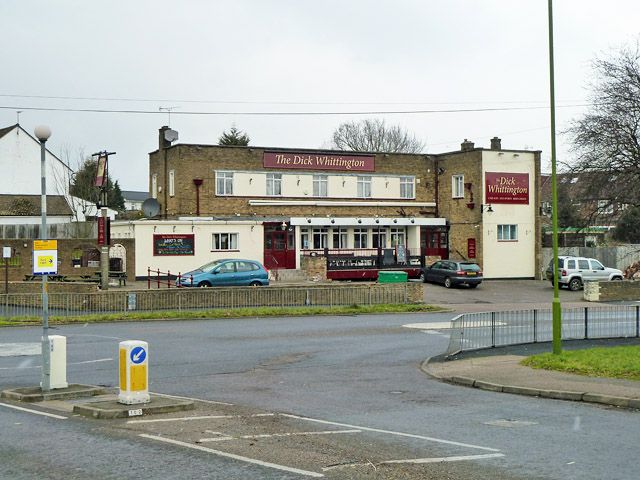
None of the estate's five pubs arrived early. At a meeting at Hampden School in January 1952 officials said cinemas, pubs, churches and open spaces were all planned.126 The first to open was the Dick Whittington, on Prestwick Road at Little Oxhey Lane, in 1957.119 The local historian Neil Hamilton gives the same year, answering a reader's question on Our Oxhey.230 It was refurbished under new management in January 2017, although Our Oxhey's photographs show it looking neglected by December 2019.230 It is the only one of the five still trading.490
The Jet opened in Hayling Road in 1959, at the corner of Holmside Rise.119,365 It closed in January 2006 and a licence to reopen it was refused that April.176 It stood boarded up until it was demolished on 15 March 2011.365
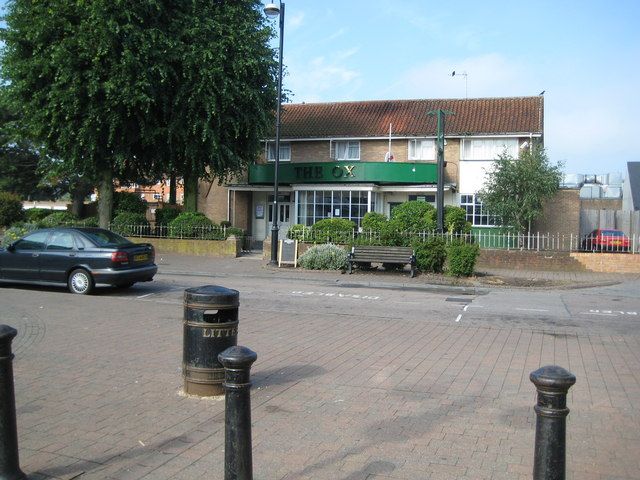
The Pheasant, on Bridlington Road across from the precinct, was open by 1961 and was later renamed The Ox.119,237 Work to demolish it began in January 2018 but was held up, and the building came down on 4 May 2018.237 The Grapevine opened in December 1961, on the corner of Prestwick Road and Heysham Drive, and the district council's planning records for the site go back to 1960.126,390 Demolition began in January 2018 and the site was cleared the following month.235 What was built on the Jet and Grapevine sites is in Rebuilding the centre.
The fifth was the Pavilion, out on the playing fields in the old golf clubhouse, which reopened as the Pavilion restaurant in 1961.119 Early residents went there to dance, and a camera club met in it.479 It closed on 30 September 2018, and in January 2022 a reader on Our Oxhey found it still shut and looking derelict.17,613 The playing fields follows what became of the building, and the argument over whether it was ever called the Brookdene Arms.