The first children on the estate had nowhere to go to school. Coaches took them into Watford, many for half days only, and it took from 1949 to about 1955 for South Oxhey to have all its own schools.28,120,147,446 Two of them were secondary, and both had gone by 1989.180,181
Broadfield, a small private school
Broadfield School was a small private primary in St Francis church hall off Oaklands Avenue, at the Oxhey Hall edge of the estate.522 It had no more than about thirty children and was run by its head teacher, Mrs E E Blount, with an assistant, from the 1940s until the late 1950s or, by another account, the late 1960s.522 Pupils walked through the church to reach the toilets, went on nature walks down Broadfields Lane, lined up at the end of the day to shake the head's hand, and most of them went on to the Watford grammar schools.522 One more private school is easily confused with the estate's own. Highfield, a girls' school in Oxhey Lane, moved out to Hampden House in Buckinghamshire in 1939 and closed in the 1950s.148 Contributors on Our Oxhey sometimes run it together with the estate's Hampden School.148
No schools at all
A resident who moved to Liphook Road in 1948 went first by coach to Oxhey School near Bushey Arches, and moved to Warren Dell School as soon as it opened.131 Another family found no school on the estate when they arrived, so their daughter took the bus from Oxhey Lane to Watford Fields School.494 Coaches picked children up on Little Oxhey Lane opposite the Dick Whittington and in Prestwick Road, and the Watford schools they went to included Beechen Grove, Watford Fields and Victoria Girls'.116,147,494 One girl went by train to Bushey Hall School before the estate had a secondary school.446 A member of another family says they missed four years of schooling, because the estate's schools were not built and there were no places left in the Watford schools.523 In a recorded interview the local historian David Reidy says many children were still travelling back to their old London schools.147
Another resident remembers going from no school at all to lessons two days a week in a prefabricated school beside Benskins brewery in Watford, until Hampden opened.524 The Community Association's Estate News was angry in the summer of 1949. Of 820 primary-age children on the estate only about 500 had full-time places, the rest had half-time lessons, and about 350 older children were in Watford schools, with more still travelling back to London.120 Not every Watford school made the newcomers welcome. A girl sent to Victoria School for Girls was told by the headmistress that the council girls would not be there long, because they would soon have a school of their own.494
Warren Dell, the first school
Warren Dell School in Gosforth Lane was the estate's first school, and its first head master, Mr C C Warburton, began teaching children there in May 1949.123,525 John Swain gives the formal opening as 16 May, while Our Oxhey says the school was officially opened on 2 July.28,123 A girl was picked to present flowers to the lady who formally opened the school, and on the day she refused to hand them over.526 Our Oxhey puts 600 children on the roll, and says the 360 who were there when it first opened could come only for half days.123 A former pupil remembers one week of mornings and the next of afternoons.526 Another started in 1949 having missed a year, because there had been no schools when her family arrived in 1948.525
Mr Neal was head by the mid 1950s and Mr Southey by the end of the decade, and pupils of those years remember their music teacher.525,526 For the estate's fiftieth anniversary in 1998 children at Warren Dell School wrote poems and songs about the old walnut tree in Hayling Road, danced round it and fed it orange juice.527
Oxhey Wood
Oxhey Wood in Oxhey Drive opened in stages, the first of them in May 1950.24,127 It was officially opened on 7 June 1951 as two schools, a junior school under Mr J Embling and an infant school under Miss Maiden.127 Its uniform in 1951 was navy blue, with a badge on the blazer, caps for boys and berets for girls, although not every child wore it.528 Our Oxhey says that by 1957 there were so many children that classes were held in the dining room and in the area outside the junior hall, while a pupil who left in July 1955 says classes were in the dining room before then, partitioned off with cupboards that his class painted.529 A photograph of the school football team of 1955 to 1956 is held at Hertfordshire Archives.530 The two schools were amalgamated in 1969.127
That same year Rank filmed Switched on at Seven at the school, which was a pioneer of audio visual teaching.167 Every classroom had a tape recorder, a screen and cine, spool and slide projectors, and the school also had a film library and a dark room.167 The head worked with the Audio Visual Council to promote the equipment, and visitors came from Britain and abroad to watch it being used, although the children thought the teachers loaded the films badly.167
James H Embling stayed as head for the rest of his working life.127,511 He was awarded the OBE in 1972 for services to education, about twenty-one years after the official opening, and he retired in about 1977.127,511 Our Oxhey, though, puts his time at the school at about thirty years.511 He was also a founder member of the Clitheroe Club management committee and its chairman for many years, and the club named its hall the Embling Hall after him, with a plaque recording that his work made the extension possible.511
The heads who followed were Mr C Tamblyn Jones, Mr J McLeod, a run of acting heads, Mr J Moore, Mr D Aisthorpe from 2007 and Mr David Smith from 2012.127 The school crossing patrol at the Northwick Road entrance served for over thirty years, and a former pupil remembers the school emblem of the early 1980s as a grey squirrel.531 A member of the governing body was thanked for twenty-five years of service.532 Every child in the school had a hand in a large wall painting in the junior playground, finished in the 1990s.533
As the number of children on the estate fell, one wing was closed in 1982. It held a Women's Royal Voluntary Service office, adult education classes for Cassio College and practice rooms for the Falcon Marching Band before it fell into disrepair, and part of it came back as classrooms in 1993 when numbers rose again.127 The rest was rebuilt in the refurbishment of 2005, when most of the Little Furze children transferred in and a large computer suite was made in part of the dining room.127 The school marked its sixtieth anniversary on 7 June 2011, and a consultation in 2013 proposed raising the intake from 51 to 60 children a year.127
Hampden, the first secondary school
Hampden opened in Little Oxhey Lane on 11 September 1950.28,124 Photographs kept by the family of the head caretaker show its entrance hall under construction in 1948 and 1949, and finished just before the school opened.124 The head caretaker served from the opening until he retired in 1975, and a caretaker's house was built next to the school in Little Oxhey Lane in 1954.124 The head master was Bill Westaway, spelled Westerway by some contributors, and the headmistress was Miss Salter, later Mrs Laye.124 A former pupil remembers metal horses on the front of the building.524
The school held an annual harvest festival, with the whole stage piled with home-grown fruit and vegetables and tinned food, and a pantomime in which the head master appeared in drag.124 A Sunday school was opened at Hampden by members of a Watford church, who ran it and its activities for many years.454 An adult education institute set up at the school closed for want of numbers, because people were working such long hours that they were too tired to study.147
A pupil of the late 1950s remembers two boys losing their lives at Ruislip Lido, and a plaque put up outside the school hall.534 The Watford Observer photographed the school often. It took a fashion show staged in front of the pupils in February 1961 and boys digging and hoeing in gardening lessons in July 1962.535,536 Between about 1962 and 1965 the head asked for volunteers to garden for pensioners on the estate, and boys did the work in bungalow gardens in school time.535 At the launch of David Reidy's history of the school in October 2014 the audience also heard about pupils who had been struck by lightning.515
Clarendon
Clarendon, the second secondary school, opened in Chilwell Gardens in September 1951, and its buildings were completed in September 1952 in nineteen acres of woodland.28,128 The grounds allowed for six football or hockey pitches, a cricket square, seven hard tennis courts and garden plots.128 The school was arranged in five blocks, each named after someone who had lived in the district. Clarendon held the hall, gymnasium, dining room, library and music room, Morison the pottery, art and craft rooms, Altham woodwork and metalwork, Capel two science laboratories and geography, and Carpender domestic science and needlework.128 Two more blocks were added as the school grew, Ascham at the southern end and Anson at the northern.174 Aerial photographs taken for the West Herts Post in 1953 survive at Watford Library.174
The four houses were Morison in yellow, Altham in blue, Capel in red and Carpender in green, again named after figures from local history, among them the builder of Oxhey Chapel.128 The prospectus says the school itself was named after the Earl of Clarendon, the first mayor of Watford.128 Head boys were given a small wooden plaque of the school crest, whose arms drew partly on the earl's.537
The uniform was maroon and grey and came from Clements Ltd in Watford, school lunches cost 3s 9d a week, and children had to be inside the grounds by 8.55am.128 The school entered pupils for the South West Herts Area Certificate, Royal Society of Arts group courses and the General Certificate of Education, and taught French or German from the first year to children with an aptitude for languages.128 Mr L W Stewart was head master from 1954, and accounts differ on whether he left in 1965 or 1966.128,538 The school had nearly 1,100 pupils in 1960 and 1961.128
A pupil who started in 1955 remembers the assembly hall with its balcony on three sides, the house shields along it, the appliqué figures of the block namesakes on the deep burgundy stage curtains, and the brass band playing as the curtains opened.539 Classes walked between blocks in all weathers, and the whole school sat on chairs for assembly rather than on the floor.539
The Clarendon band
Clarendon's head of music and bandmaster from September 1952 until his death in November 1971 wrote the words of the school song.540 The brass band, founded in the school's early years, played at every morning assembly, at the annual schools concert at Watford town hall and at the school's Christmas shows, and it made a record with a photograph of the band on the cover.541,542 A bandsman who played from 1955 to 1961 remembers a visit to Mainz in Germany in about 1959.542 Another trip, made between 1958 and 1963, took the band to Bacharach on the Rhine, where it played in an old people's home and in the street and was given a silver plaque.541 One player was the first member of the band to be picked for the National Youth Orchestra, aged sixteen in 1963.542 One member played from about 1965 to 1969, so the band carried on after the merger with Hampden, and old bandsmen went on to the Royal Marines and Royal Artillery band services, to instrument making and to professional music.541,542
What the pupils made at Clarendon
Pupils made mosaics in the pottery department under the pottery teacher. A Flight into Egypt panel of 1959 was cut, glazed and fired by hand, laid face down on a paper template and held with syrup until it was cemented, and it stayed on the wall outside Anson block through the building's later years as a day centre until a refurbishment removed it.543 In the summer of 1962 pupils built a concrete group of tall spindly figures making what looks like a variation on a human pyramid, which stood in the school grounds and was photographed there by the Watford Observer.544,545 The art department's report to parents at the eighth annual prize giving, on 29 November 1962, called it The Acrobats and said it had been completed under the same teacher.544,545 Pupils painted a mural in 1963, which a former pupil says was scenery for a school production of The Mikado.546 A statue known as The Crusader stood on a low wall at a corner of the Clarendon building, overlooking the playing field, and was still there shortly before demolition.547 A large pottery charger made at the school in the 1950s was rescued from the ruins by a former pupil and is now repaired and on display at Three Rivers Museum in Rickmansworth.548,549
Out of doors at Clarendon
The grounds were worked as well as played on. The rural science teacher ran a Young Farmers Club and had pupils digging garden plots in front of Clarendon Block.128,550 An observatory was added later, behind Morison block by the trees.128,551 The long awaited swimming pool opened in 1963.162
The teams were photographed almost as often as the buildings. A Clarendon Old Boys football team, made up of former pupils, was playing away fixtures in the 1960 to 1961 season, including at Bennetts End.552 In February 1961 the Watford Observer photographed six lads with a basketball as a school team, although a former school player thinks they may be an old boys side, because some of them went to Hampden.553 The 1st XV, the school's senior rugby team, was photographed outside the main block in March 1962 by the head of physical education, and the picture was later used on the cover of the school's history.554
Days out and big days at Clarendon
Some of the school's best remembered days were spent a long way from Chilwell Gardens. A party went to St Malo and Paris with a French teacher in 1961, and the friends who made that trip were still meeting fifty years later.555 Teachers took other parties abroad too, to Barcelona in July 1962 and to Neustadt in Germany in the early 1960s.556,557
The big days at school were photographed too. The Watford Observer took the school fete of 17 June 1961, where a pupil pinned a flower on the head master, and a ballroom dancing competition on 26 October 1963, with the dancing taught by a local dance school.556,558 The Christmas dinner of 1963 was popular enough that children who did not usually stay for lunch came in for it, with candles and greenery on the tables.559 The school fair of 29 May 1965 drew hundreds of parents and children for a trampolining display by the former Watford footballer Bryn Jones, who signed autographs, and for children's dancing and professional wrestling staged in the bottom playground beside the youth wing, with television wrestlers and a television referee.560 In June 1965 Royal Navy officers gave the boys a rigging display and taught them to use a boatswain's call.561
Little Furze
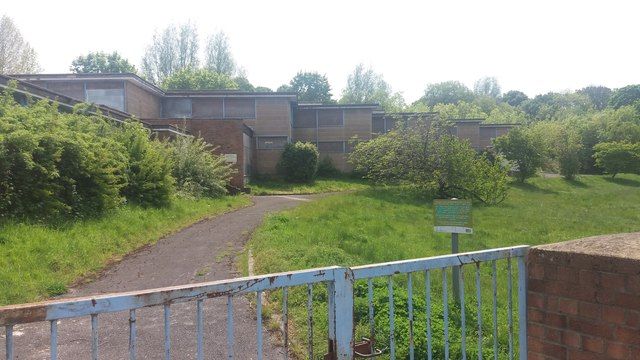
Little Furze opened in September 1952 with 600 places across its infant and junior sections.135 Its 13 acres were thought a difficult site. The steeper slopes were levelled for the buildings and playgrounds, the lower slopes drained badly and were turfed to hold them together, and the only level playing field was the narrow strip beside Gosforth Lane, so most matches against other Watford schools were played on the new South Oxhey playing fields.135 The head through the first decade and more was Mr Len Curling.555 A contributor who started in March 1953 rates Little Furze as arguably the leading primary school on the estate in the early 1950s, along with Oxhey Wood.135 In 1954 twenty-seven children in one class passed the 11-plus and went on to Watford Boys' and Bushey grammar schools, Watford Tech and the newly opened grammar school at Rickmansworth. John Swain's article gave the class as 54, but he later corrected it to 45.555
Former pupils remember a green blazer with a tree badge, school dinners at 2s 6d a week, being taught to dance round a maypole, and a big model brown cow in the entrance.562,563 A caretaker's son remembers an air raid siren on a wooden post on the corner next to the school in its first years.564 In the early 1960s Little Furze children camped in bell tents at Cuffley, sharing the camp with children from St Meryl school at Carpenders Park.563 Mr Silvani, who had taught for many years at Oxhey Wood, was head for some years in the 1970s.565
Greenfields, Woodhall and St Joseph's
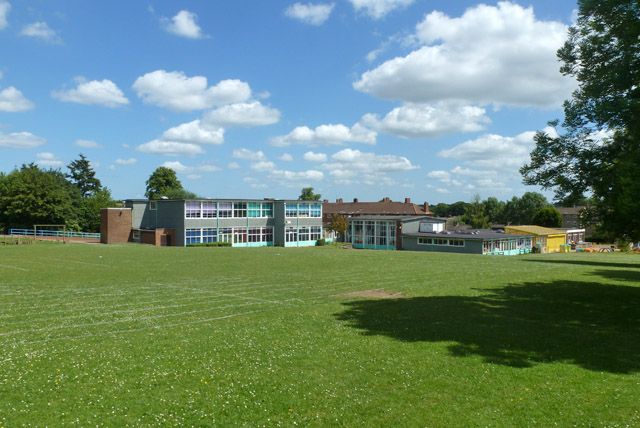
Greenfields also opened in September 1952.28 It was designed by H. T. Swain of the county council and was the first of Hertfordshire's second generation of schools built on the prefabricated Hills system, and it is listed Grade II.136,566 A pupil of the 1960s remembers Mr Donaldson and then Mr Roberts as head, and says the school's children moved on to Clarendon.567 Woodhall followed in 1954, across the road from Hampden School, and took infants and juniors from streets such as Bramshaw Gardens and Leven Close.28,125,147,148
St Joseph's Catholic primary in Ainsdale Road came last, in about 1955.149 Its head master in 1961 was Mr Pitt, who called the school into assembly and sent the children home early when heavy snow began to settle one November morning.568 The school outing in 1962 was a coach trip to the paddling pool at Cassiobury Park, costing sixpence, which poorer families paid off at a penny a week on a card signed by the teacher.569 One pupil's walk to school in the early 1960s took him past the waste ground known as The Logs, through a muddy short cut to the station, over Prestwick Road where residents were asking for a zebra crossing, and past the two new eight storey blocks of flats.570
Colnbrook and special education
Warren Dell Infant School became Colnbrook, on Hayling Road.526,571 Poor But Proud's timeline dates the change to 1964.119 By 1999 the two were plainly separate schools, because Colnbrook in Hayling Road and Warren Dell School in Gosforth Lane both measured the old walnut tree's growth each year.527 Colnbrook is now a county council special school for primary-age children with learning difficulties, autism or speech and language needs.571
Little Furze shared its site with a special school too. A pupil who started in 1962 remembers the ground floor classrooms being taken over by the school for disabled children, which built a swimming pool beside the dining room.562 Government records name it as Hangers Wood School, which closed in 1994.188
Sir James Altham, 1967 to 1989
In September 1967 the two secondary schools merged as Sir James Altham, a split-site comprehensive, though in one of his comments John Swain, who had taught at Clarendon, gives October 1967.28,128,539 A pupil describes the split site from the inside, with a first year at Clarendon, the second year at Hampden and then back to Clarendon until leaving.567 The Clarendon site carried on as the upper school into the later 1970s, given as 1967 to 1977 by John Swain and remembered as 1975 by a resident who photographed it when it closed.174,551 During the firemen's strikes of the 1970s the Clarendon buildings were used as a temporary army fire station for Green Goddess engines, to the delight of local children.572
The school closed in July 1989 with 152 pupils. About 90 went to Bushey Hall and 30 to Langleybury, and the rest to other schools in the area.180,181 The last head, Mr John Townsend, left to be deputy head at St Clement Danes, and said the thing he would miss was the friendliness of the place.180 At the farewell assembly every pupil and member of staff was given a commemorative mug, and Clarendon's late head of music and the memorial fund in his name were remembered.180 In its last year the school produced a newspaper called Altham Says with pupils from Queens, Bushey Hall and Bushey Meads, said to be the first issue written entirely by pupils.180 The estate has had no secondary school since.146,181
What became of the schools
The Clarendon buildings went first. Morison and Altham blocks were demolished for housing soon after the upper school site closed, and Clarendon Block stayed in use as a community centre for about twenty-five years.174 It was photographed inside on 13 August 2002, and again on 5 October 2002 once demolition had begun, and former pupils came back for a last look.194,195 They have gone on meeting since.573 The Northwick Road day centre still occupies part of the original school buildings, and another part, used for years by the Industrial Therapy Organisation, is disused.574
On the Hampden side, the county council approved an adult day centre on the old Sir James Altham site in August 2024.254
The field known as the Joint Schools Playing Field in Ainsdale Road was one of the areas shown for housing on the council's plans of 2013.575 Both secondary schools have been written up. David Reidy's history of Hampden covers the former secondary modern from 1950 to 1967, and his A History of Clarendon School, South Oxhey runs to more than 220 pages in seven chapters, with appendices including the prospectuses of 1956 and 1965 and a reproduction of the school magazine, the Clarendon Ranger.514,576 The Clarendon history was launched at 2pm on Saturday 8 October 2016 in the ASCEND centre at All Saints Church in Gosforth Lane, at £15 a copy.514
Little Furze closed in December 2004.577 Poor But Proud's timeline puts a serious fire a year before the closure.119 John Swain writes that several of the original buildings were pulled down after a serious fire, without saying when it happened, and a neighbour thinks the school had closed before the fire.555 The empty buildings had been broken into and boarded up by March 2013.565 Local reports put the county council's spending on securing the site at about £800,000.555,578 In January 2021 Three Rivers District Council announced that the site would take a single care home replacing two local ones, plus flats.578 Low plastic fencing went up to catch slow worms for removal to Chorleywood House grounds, and a notice warned of asbestos in the building.563,578
Demolition began in late July 2022 and the building was flattened by the end of September, after which a stone crusher reduced the rubble to gravel and levelled most of the site.565,578 A neighbour notes that a stream crosses the sloping ground and has to be piped, and that a spring seems to emerge at the gates of St Joseph's school nearby.135,578 A ground breaking ceremony with the county council and invited guests was planned for mid-November 2023, and building work was well under way by March 2024.564,578 The hoarding on Gosforth Lane in May 2023 called the scheme Little Furze Care Home and promised 75 bedrooms, communal spaces, external courtyards and a cafe, with Kori as the contractor.579 It opened under a different name, as Furzewood Lodge, on 14 September 2026.267 Buildings gives each school site then and now.