Woodhall Lane and the concrete houses
Drag the round handle to slide between the old map (left) and today (right). On a phone, tap the map once to move it.
Then
As well as brick and rendered houses, the estate had factory-made types: Cornish and Stent houses, and steel-framed BISF houses known locally as tin houses. The LCC's opening pamphlet of November 1947 says the prefabricated types planned for the estate had Ministry of Health approval for a life of 60 years. A Stent house of precast concrete on the corner of Woodhall Lane was photographed in 1948. A resident writing on Our Oxhey remembers moving into the lane in July 1948, when its roads and pavements were unmade and there were no street lights. The present Carpenders Park station came into use on 17 November 1952. One Our Oxhey writer says that leaving it by the proper route meant a long walk round to Woodhall Lane, so some passengers crossed the live rails and climbed a fence onto the lane instead, and a number were electrocuted. Woodhall School opened in 1954. Some concrete houses were later found defective, and a resident who moved into Prestwick Road in about 1954 remembers the outer walls there being taken down and rebuilt in brick about fifteen years later.5,25,28,31,64,115,117,139,438,452,453,693,715
Now
Most of the estate's original housing has since been substantially renovated. Because many homes had been bought by their tenants under the Right to Buy, the defective prefabricated houses were repaired in stages, to different budgets and specifications. A photograph of 2013 shows the same corner Stent house still standing. Woodhall Primary School is still on the lane, which is now in Carpenders Park ward.
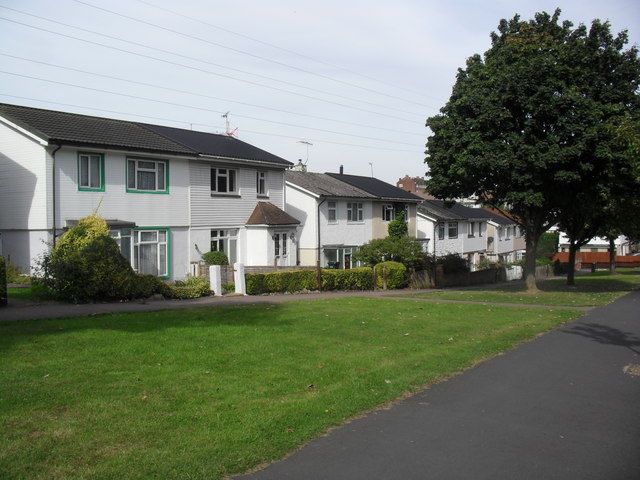
Position from OpenStreetMap. See Sources and method.